

The Fire Drill No Business Owner Wants to Run
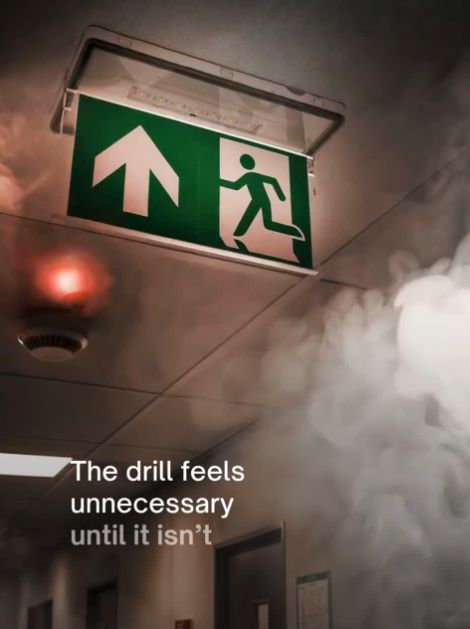
When a fire alarm goes off at a school, nobody stops to figure out what to do next.
The students automatically line up, teachers direct them smoothly toward the exits, and everyone knows precisely where to go. They don’t panic, because they’ve already practiced the exact routine dozens of times.
Your business’s data backup and recovery strategy should work the exact same way.
Unfortunately, most businesses have never actually practiced their recovery process. They pay for a backup tool, assume it’s working in the background, and cross their fingers that it will save them when disaster strikes.
A backup you’ve never tested isn’t a strategy—it’s just a wish.
Why fire drills save lives and businesses
Fire drills do much more than satisfy an insurance policy or check off a compliance requirement. They help your team get comfortable with the process before high-pressure situations set in, answering the only question that truly matters: Will this actually work when we need it to?
When everyone knows where to go, who leads the response, and what happens next, panic doesn’t take over.
More importantly, if the recovery plan has a flaw, you discover it during a quiet practice run—not in the middle of a live ransomware attack or server failure. That is the true value of testing your backups: it removes the guesswork before a real emergency hits.
The business version of a fire drill
Translating this into business terms: You likely have backups in place, but you haven’t actually tested whether they work. You simply assume they do.
Most businesses we talk to are in the exact same boat. They don’t realize there’s a problem until an outage strikes and they are left scrambling to figure out three critical questions:
Will that backup actually restore without corruption?
How long will the restore process take?
Which core systems come back online first?
That is when the true cost of downtime gets real.
A multi-hour outage isn’t just a minor technical inconvenience—it’s a direct loss of revenue. It’s frustrated customers calling an unanswered phone line because your team can’t access their account files. It’s payroll processing that stalls out, customer orders piling up in a queue, and internal communication collapsing.
For teams that don’t regularly practice recovery, those few hours of downtime can easily stretch into agonizing days—or even weeks.
What recovery testing looks like
We don’t leave recovery to chance. We work directly with businesses to run actual, real-world recovery tests. We restore data directly from your backups, time how long the process takes, and identify which systems come back smoothly and which ones hit a wall.
We find the hidden gaps before a real incident exposes them for you.
A comprehensive recovery test answers the exact questions most business owners don’t think to ask until their entire network is already down:
Will the restore actually work the way you think it will?
How many hours will recovery take from start to finish?
Which critical systems need to be restored first to keep your operations functional?
Can your team keep working during the restoration process, or does all work grind to a halt?
Are there hidden gaps in your backup strategy that you haven’t identified yet?
That is the difference between simply having backups and being truly prepared to recover.
What happens when you skip the drill
When recovery has never been tested, even a routine, minor disruption can quickly spiral into a major operational crisis.
Employees lose access and sit idle while leadership demands updates that no one has the answers to provide. Customer service can’t pull up account details, sales reps can’t process incoming orders, and payroll gets delayed.
What should have taken two hours to fix now takes six—or longer—simply because nobody practiced the recovery steps ahead of time.
The true cost isn’t just the lost hours on the clock. It’s the revenue that walks out the door, the client trust that gets permanently damaged, and the widespread panic that could have been completely prevented with a single practice run.
Don’t wait for the emergency to learn the plan
Nobody runs a fire drill because they expect a fire tomorrow. They run it because a live emergency is the absolute worst possible time to figure out who does what—or to discover where your plan breaks.
Your backup and disaster recovery strategy requires that exact same level of preparation.
If you haven’t actively tested your recovery process, you are relying entirely on assumptions when it matters most. And if those assumptions turn out to be wrong, you won’t find out until your business can least afford the mistake.
Let’s find out where you stand
Most businesses we talk to discover they aren’t nearly as prepared as they think. Making that discovery during a controlled test is infinitely better than realizing it in the middle of an actual crisis.
Schedule a quick, 10-minute discovery call with our team. We’ll walk through your current backup strategy, identify what’s actually been tested versus what’s being assumed, and give you a crystal-clear picture of whether your recovery plan will hold up when it really matters.
When an outage hits, you want to be executing a proven plan—not inventing one on the fly under intense pressure.

Author
Josue Nolasco
I'm a former US Marine infantryman who made a switch to IT to provide cyber security services to SMB's. I'm as much a child of technology as I am of the great outdoors. I like spending time playing, experimenting with, and learning new technologies and whenever possible taking camping trips with friends and family.